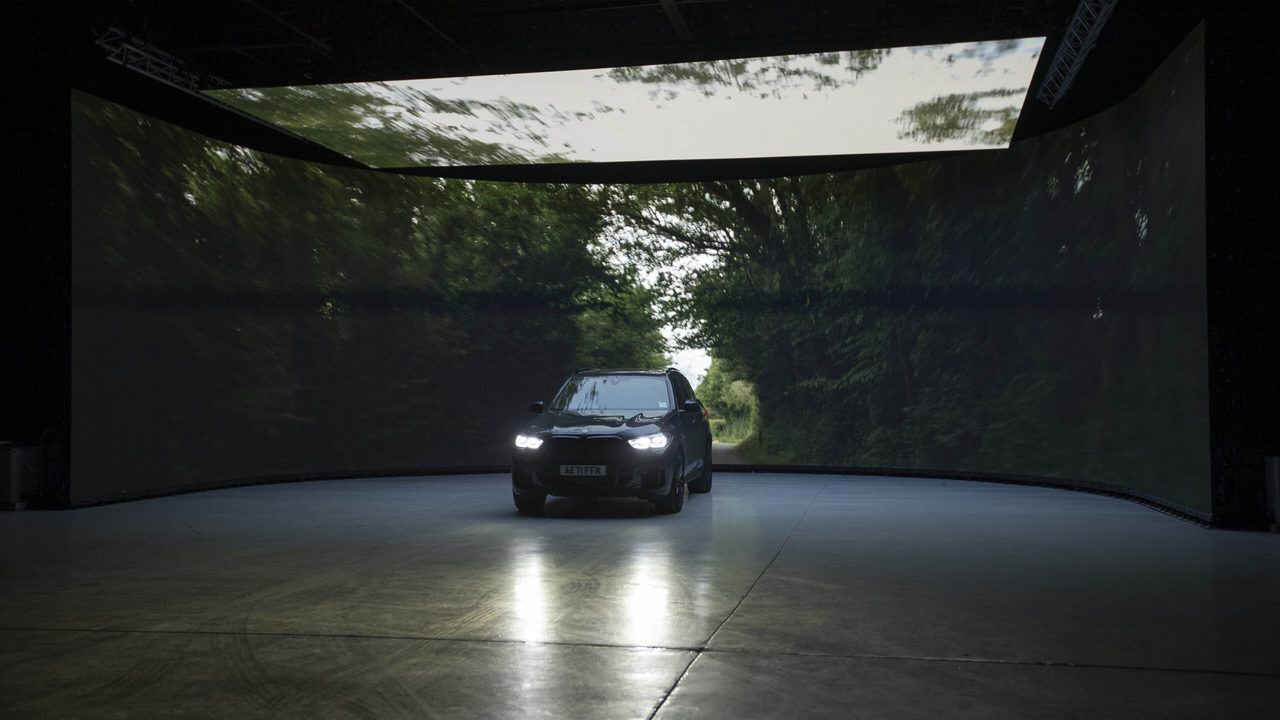
The news isn't a bigger LED stage. It's that the walls now move on their own, turning the hours lost to reconfiguration between setups into a competitive edge.
Garden Studios' newest virtual production stage centers on a fully motorised LED ceiling built from 2.6mm pixel-pitch Absen panels. The ceiling tilts up to 90 degrees to act as a front wall, closing the space into a full 360-degree volume. It travels up to 18 metres front-to-back and doubles the ceiling area of the studio's previous stage. Running Unreal Engine-based real-time workflows, it covers roughly 90% of camera angles with a single 180-degree rotation, cutting the downtime between setups.
The real signal
The headline reads like a spec bump: a bigger, brighter ceiling. The real signal is what's being automated, which is reconfiguration itself. In most volumes, changing the relationship between camera, wall and ceiling means physically rebuilding part of the stage, and that time is dead money. A ceiling that tilts, travels 18 metres and becomes a front wall on command turns a construction task into a software one. The scarce resource being reclaimed isn't pixels, it's shooting hours.
The 90%-of-angles-in-one-rotation figure is the tell. It means a crew can capture most of a day's coverage without tearing down and rebuilding the environment between setups. Downtime is where virtual production budgets leak, and where the promise of fixing things in real time quietly breaks. Removing it is worth more than another increment of resolution.

What a producer can do now
If you're scoping a shoot or a live brand stage on a volume, cost it in reconfiguration time, not just day rate. Ask how many distinct setups the schedule needs and how the stage transitions between them. A motorised, reconfigurable volume can collapse a two-stage-move day into a single continuous session, and that math often decides whether an ambitious sequence is affordable at all.
The same capability travels well beyond film. A volume that reconfigures on command is a brand stage that can host a keynote backdrop in the morning and an immersive product reveal by afternoon without a rebuild. Treated as reusable infrastructure rather than a one-off set, LED volumes as brand stages become a venue you can re-dress in real time, which is exactly what a multi-segment launch event needs.
The Unreal Engine layer is what makes the physical flexibility usable. Motorised walls only help if the rendered environment keeps pace with them, tracking the camera and reflowing as the ceiling tilts. Real-time engines are what let a physical reconfiguration and a digital one happen as one move instead of two, which is where the frontier in this space has quietly shifted, from image quality, largely solved, to changeover speed, where schedules and budgets are actually won or lost.
Bridging that physical and real-time layer is our lane. SensaLab works as the white-label real-time 3D and immersive partner agencies and studios bring in to design and run volume-based experiences under their own name, keeping the render side in step with the stage so the time you save stays saved.