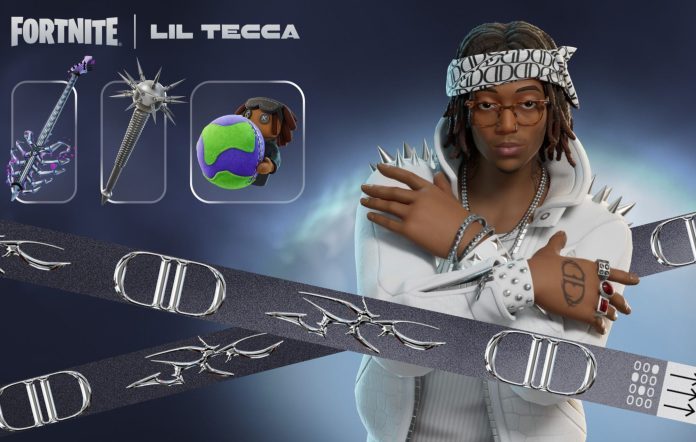
The news is not a rapper in Fortnite. It is that a game season now works like a residency, with reactive cosmetics, a music pass and a catalog drop, and the artist embedded for weeks rather than one night.
Fortnite Festival Season 15 went live on July 30, 2026 with Lil Tecca as its headline artist, according to NME. Four of his tracks, 'Ransom', 'Dark Thoughts', 'Love Me' and '500lbs', were added in-game as playable jams. The season's Neon Dreams Music Pass unlocks a music-reactive Tour Ready Lil Tecca Outfit, a Mic Mace Pickaxe and Tecca's World Back Bling. NME notes he is the first rap headliner since Snoop Dogg in early 2024.
A residency, not a cameo
The easy story is a rapper guest-starring in a game. The more useful read is the format. This is not a one-night virtual concert. It is a season, a weeks-long run in which the artist headlines a mode, seeds a catalog of playable tracks, and anchors a paid pass full of cosmetics that react to the music. The real signal is the residency structure, not the celebrity booking. The artist is a resident for the length of the season, not a headline for a single evening, and the pass turns that residency into a durable revenue line rather than a one-time gate.
For a producer weighing a talent partnership, that is the shift worth stealing. A cameo spends its value on announcement day. A residency structure spreads it across a calendar, with reasons to return each week and merchandise, here reactive cosmetics and a themed pass, built into the experience rather than sold beside it. Note also how the catalog does the work: four playable tracks give the audience something to do repeatedly, not just a face to recognize once. If you are planning an artist or IP tie-in, design for the season shape first and the launch moment second.

Why it belongs in an experiential toolkit
Music-reactive cosmetics are the detail that earns this a place in the toolkit. An outfit responding to the track is the same real-time craft that drives a reactive live-show environment, audio driving visuals in the moment, on the audience's own terms. Whether the surface is a stage, an LED volume or a game season, the underlying capability is identical: systems that respond to input rather than play back a fixed cut.
The lesson for physical builds is that responsiveness is now the expectation, not the upgrade. An audience that has customized a music-reactive outfit in a season expects the same liveness from a room, a projection or a booth. The fact that a rap headliner returns to this slot for the first time since early 2024 also signals that these seasons are being programmed like a real venue calendar, with lineups that shift to keep the format fresh. Designing experiences that answer back, to sound, to movement, to choice, is what keeps them from feeling like a screen you happen to stand near.
This is the work SensaLab does quietly in the background. We are the white-label real-time 3D and immersive layer agencies and brands lean on to design and run reactive experiences under their own name, so the relationship with the artist, and with the audience, belongs to you.