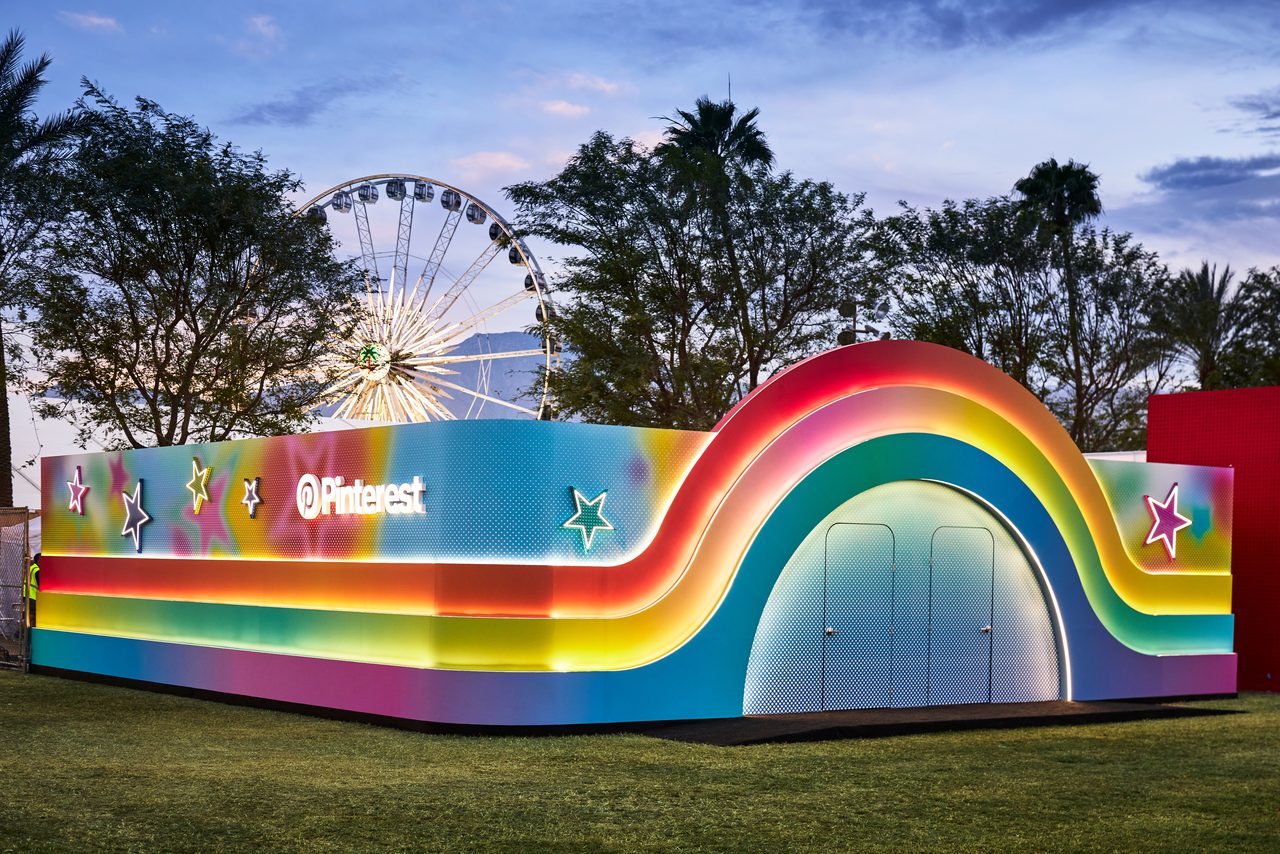
The news isn't that big brands showed up at Coachella again. It's that the winning ones built spaces designed to be occupied, not photographed.
Coachella 2026's sponsor roster read like a study in staying power and firsts. Pinterest debuted a first-of-its-kind phone-free experience on the festival grounds, complete with e.l.f.-powered beauty touch-ups. Heineken returned with Heineken House for its 23rd year as official beer sponsor, while Aperol ran its Aperol Day Club for a fourth year as official spritz partner. Magnum arrived as Coachella's first-ever frozen dessert sponsor with a spray-bar activation in the 12 Peaks VIP area. Near the main entrance, Barbie's 'You Can Be Any Barbie' paired a charm bar and a portrait studio with a hologram entrance.
The real signal
The real signal isn't the guest list, it's the shift in what a sponsorship is now expected to do. Pinterest, a company whose entire business is images, chose to build a phone-free room. Barbie led with a hologram threshold instead of a step-and-repeat. The center of gravity has moved from the shareable photo to the spatial experience, from a backdrop you pose against to an environment you move through. The scarce asset at a festival is no longer reach; it's attention held in a physical space long enough to matter.
Staying power reinforces the point. When Heineken House returns for a 23rd year and Aperol Day Club for a fourth, those aren't one-off moments; they're recurring venues regulars expect to find. The quiet metric shift is from impressions to dwell time and return visits, and from a booth you photograph to a place you spend an afternoon.

What a producer can do now
Audit your next activation against one blunt question: would anyone stay if they weren't allowed to post about it. Pinterest's phone-free bet is a stress test worth borrowing. Design a core interaction that rewards presence, whether that's a hologram entrance that resets per guest, a portrait studio that hands back something unexpected, or a ritual that only works in person. Let the shareable output be a byproduct, not the point.
This is why real-time and spatial media belong in the toolkit rather than the line item you cut first. A hologram entrance, a phone-free interactive room, a portrait studio that renders on the fly: these are systems, not props. Built as reusable activation kits, they can be re-skinned per client and re-staged across a festival circuit, which is exactly how a Heineken House earns a 23rd year.
Magnum's first-ever frozen-dessert slot carries its own lesson: categories keep opening at these events, and the brands that claim them early tend to define the format. The producer who can stand up a distinctive spatial experience quickly is the one who gets the first-mover call, and none of it requires the biggest budget on the field, only a clear idea of the single thing a guest should feel and the means to deliver it across a weekend of foot traffic.
That's the layer we work in. SensaLab is the white-label real-time 3D and immersive partner agencies and brands lean on to design and run experiences like these under their own name, from the interactive core to the render pipeline that holds up all weekend.